Mae Hong Son Loop
A mountain loop with long riding days, steep sections and plenty of curves. It is beautiful, but it deserves respect. Choosing the right scooter and giving yourself enough time makes a big difference.
Choosing the right scooter matters
The question is not only whether a scooter can complete the loop. We also look at how comfortable the ride will feel, how much work the scooter has to do, and how much confidence the rider needs.
Light and easy, but not our first choice
A 125cc scooter is light, simple and very easy to manage around Chiang Mai. For the full Mae Hong Son Loop, the same advantages come with some limitations.
Long climbs, repeated mountain sections, luggage or a passenger can ask much more from a smaller engine. The scooter may spend more time working at higher throttle and have less reserve power available when climbing or accelerating.
The ride can feel slower, more tiring and less relaxed over several days, especially if you need to keep momentum on climbs.
Carrying more weight and working hard for long periods puts more demand on the engine, transmission and brakes than normal city use.
A small scooter may feel easy to control, but the route itself is not a beginner route. Tight curves, descents and changing road conditions still require confident braking, cornering and speed control.
A strong all-round choice
A 155cc scooter gives a very useful balance between power, manageable weight and easy handling. It works well for solo riders and can also suit two riders when the total load and luggage stay reasonable.
Compared with a 125cc, it gives more useful power for climbing while still staying lighter and easier to manage than a 300cc. For many riders, that makes it a comfortable middle ground for the Mae Hong Son Loop.
Light enough to feel responsive in curves and at lower speeds, while still giving enough power for normal mountain riding.
Two riders are possible, but when passenger weight and luggage become heavy together, climbing and long-distance comfort can become more demanding. That is where a 300cc starts to make more sense.
The manageable weight can make a 155cc easier to control than a larger scooter, but the route still requires confidence with mountain curves, downhill braking and changing road conditions.
More relaxed for distance, passengers and luggage
A 300cc scooter gives the rider more available power, more space and a more relaxed feeling when the trip involves longer days, luggage or a passenger.
The extra power makes long climbs and loaded riding feel less demanding, while the larger seat and storage make several days on the road more comfortable.
More relaxed at speed and under load, with less need to work the scooter hard on long climbs.
A 300cc is heavier and physically larger. Tight turns, parking, slow manoeuvres and downhill sections can require more confidence and control.
Do not choose a larger scooter only because it has more power. Extra weight can become harder to manage if you enter a curve too fast, brake suddenly, lose balance at low speed or need to make a tight manoeuvre.
A bigger scooter does not automatically make the Mae Hong Son Loop safer. The route includes long mountain sections, many curves, climbs and descents. If you are not confident with cornering, braking downhill or riding for several hours at a time, the safest decision may be to build more experience before attempting the full loop.
Ban Rak Thai & Pang Ung
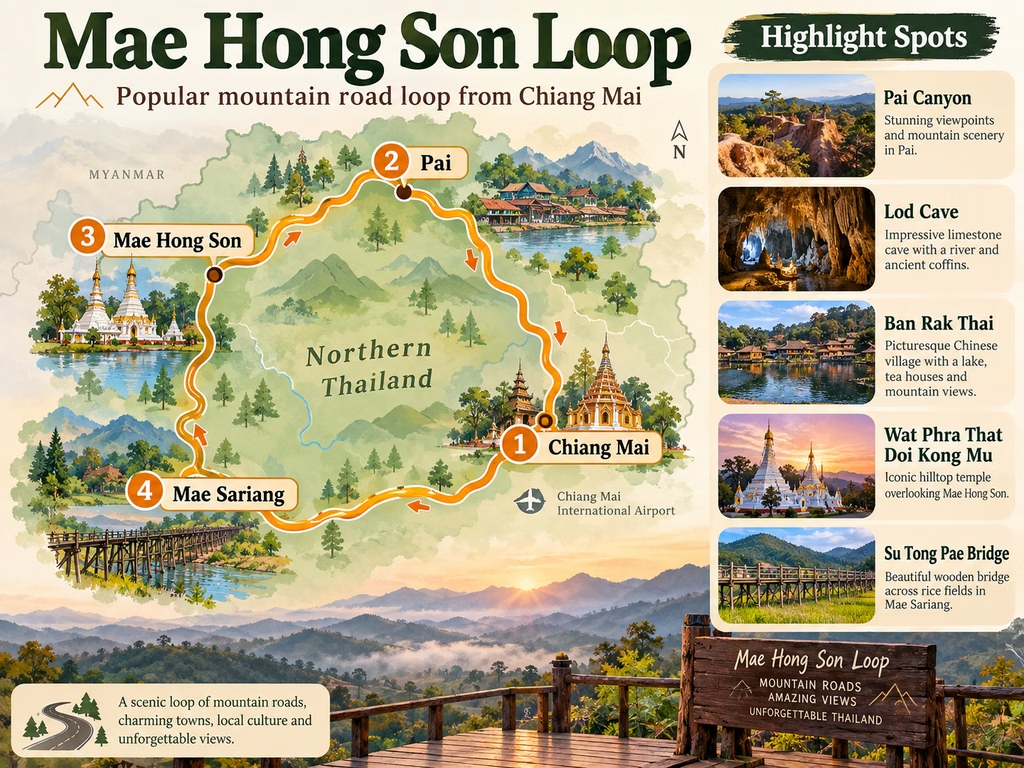
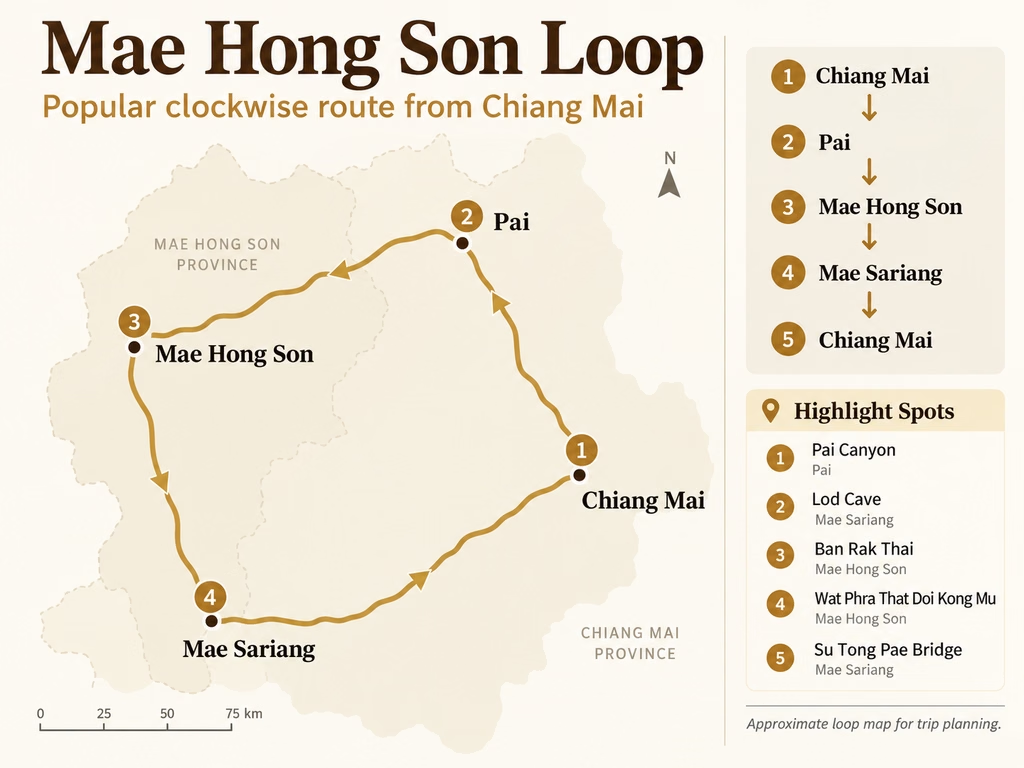
A side trip up towards the Myanmar border for riders with a spare day. It’s the dotted line on the route map above, easy to add between Pai and Mae Hong Son.
A Chinese tea village on a mountain lake
Ban Rak Thai (also called Mae Aw) was settled by Chinese Nationalist families in the 1960s. Mandarin is still the main language. Tea houses sit around the lake and tea plantations climb the hills behind them.
The Pang Ung reservoir, a misty lake ringed with pine trees, is only about 5.5 km along the same turn-off. Stop there first, then carry on up to Ban Rak Thai.
November to February. Cherry blossoms in January and February bring weekend crowds, so go midweek if you can.
There are a few simple lakeside guesthouses. Book ahead in January and February.
Fitting it into the loop
Add it on the Pai to Mae Hong Son day, or ride it as an out-and-back from Mae Hong Son town.
- Turn off Route 1095 at Na Pa PaekA little before Mae Hong Son. Follow the signs for Ban Rak Thai.
- Stop at Pang UngAbout 5.5 km past the turn-off.
- Carry on to Ban Rak ThaiAbout 1.5 hours each way from Mae Hong Son town.
- Rejoin the loopRide back down and continue to Mae Hong Son.
Narrower and steeper than the 1095, with some potholes and tight bends. Take the climbs and descents slowly, especially after rain.
There’s no reliable ATM in the village and most places are cash only.