
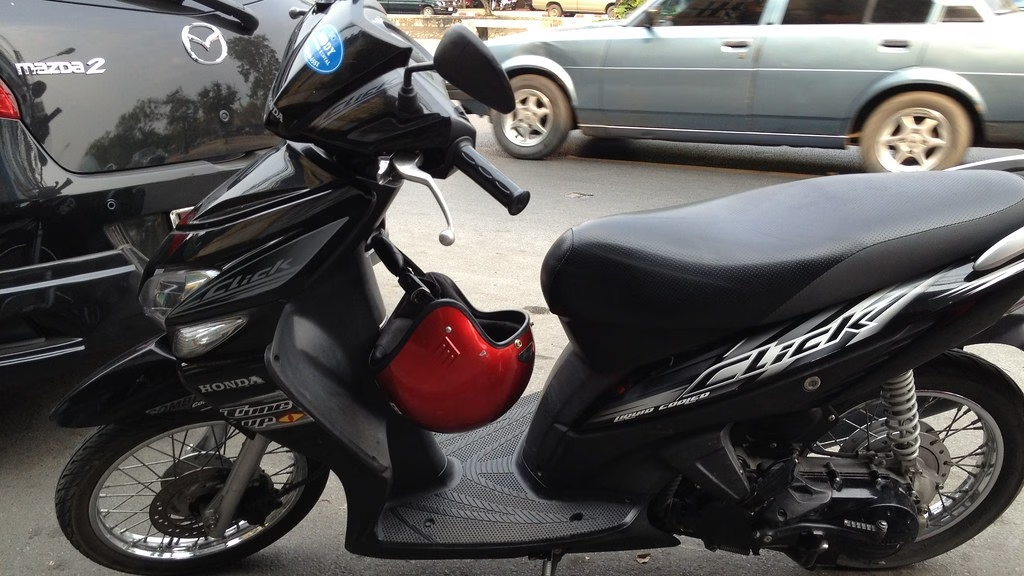
How to Avoid Scooter Rental Scams in Chiang Mai
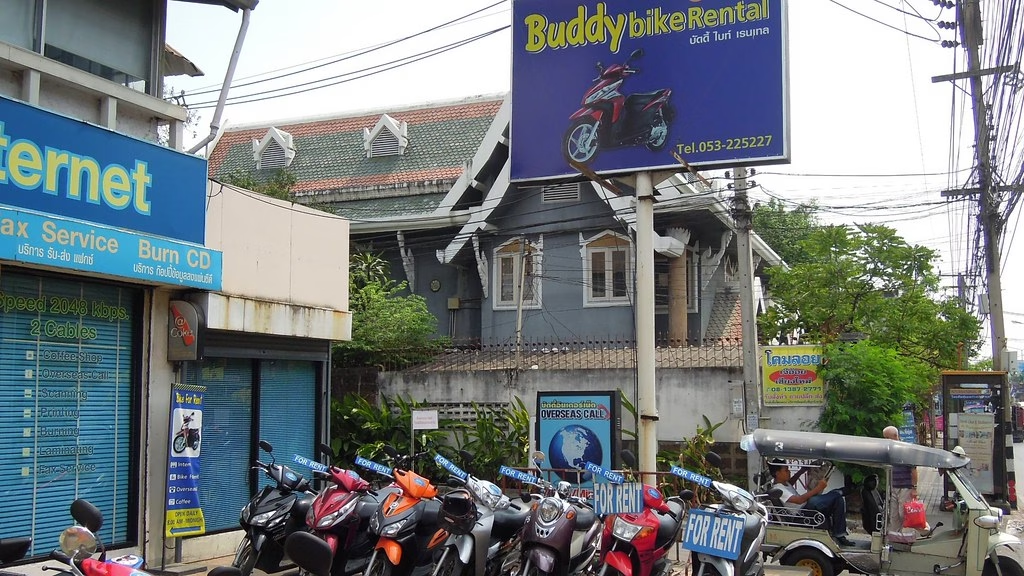
We hear about this more than we’d like, usually from someone who rented somewhere else first. They got burned, and now they want to know how to tell a decent shop from a bad one before it happens again. It’s a real pattern here, not tourists being paranoid. Chiang Mai gets a steady flow of first-time renters moving through fast during high season, and a small number of operators have figured out exactly how to work that.
None of this is really about big dramatic losses. It’s usually not life-changing money. It’s an afternoon wasted arguing at a counter when you’d rather be doing anything else with your last day in the city. Enough of that happens here that it’s worth walking in prepared. Most of what follows takes five extra minutes at pickup. Those five minutes are the difference between an easy week on two wheels and an argument over your deposit on the day you’re trying to catch a flight.
The Passport Deposit Trap
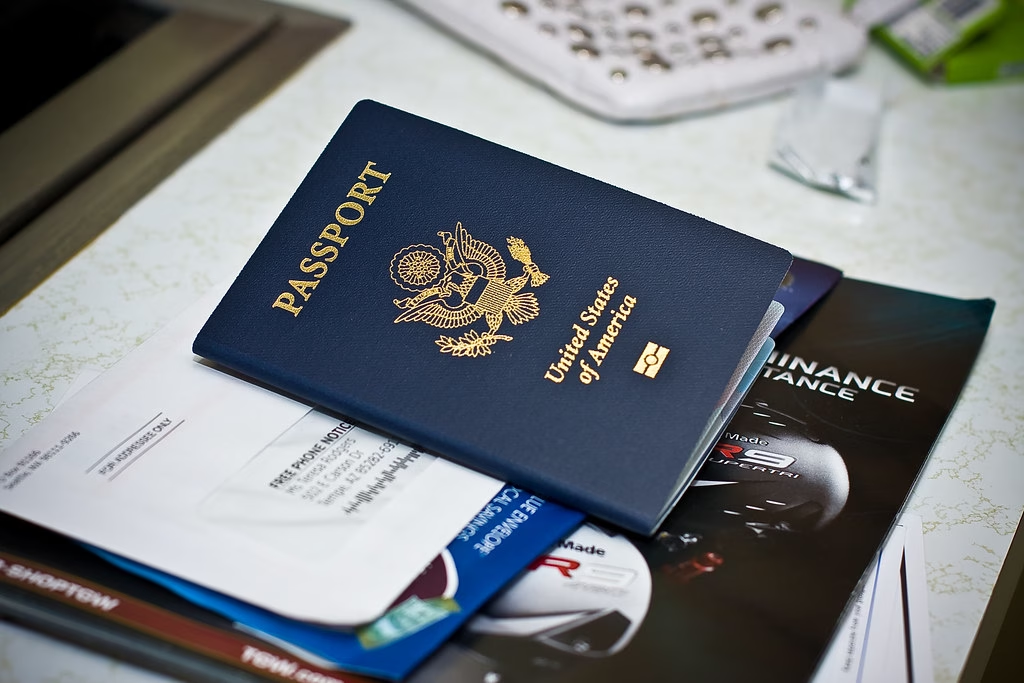
A lot of shops in this city will ask for your passport as security instead of cash. Plenty of tourists hand it over without thinking twice, because it feels like standard practice — hotels do something similar at check-in, so why not a scooter shop?
Here’s the difference. A hotel isn’t going to invent a scratch on your suitcase to justify keeping your ID. A dishonest rental shop, holding the one document you need to fly home, suddenly has the upper hand in any argument that comes up later — and you’re the one stuck negotiating with no real way to just walk away.
A standard automatic scooter here usually asks for a cash deposit somewhere between 2,000 and 5,000 baht. Bigger bikes cost more upfront. That’s ordinary, fair business practice. What isn’t ordinary — or necessary — is a shop that won’t rent to you without your actual passport sitting in a drawer behind the counter.
Ask for the cash-deposit option instead. We keep a stack of passport photocopies at the counter for exactly this reason — it takes thirty seconds, and nobody’s original document ends up somewhere they can’t see it. If a shop can’t be bothered to offer that same accommodation, ask yourself why holding the original matters so much to them. A photocopy plus a cash deposit covers a shop’s actual risk just fine. If a place won’t accept that combination, go rent from the next one.
The “That Scratch Wasn’t There Before” Trick
This is the one we hear about most. A tourist returns a scooter after a normal week of riding, and whoever’s doing the inspection finds a scratch, a dent, or a cracked mirror they insist wasn’t there at pickup. Cue an argument, a repair estimate that keeps climbing, and a very inconvenient standoff right when the tourist needs to be catching a bus.
Sometimes the damage really did happen during the rental and just went unnoticed. Sometimes it was there the whole time, and the shop is counting on the fact that most renters won’t remember every scuff on a bike they’d never seen before that week. Either way, the fix costs nothing: film a slow video walking around the entire bike before you ride off. Every panel. Both mirrors. The tires. The lights. Say the date out loud while you’re filming, and mention the shop’s name.
Some shops will do a joint walk-around with you and note existing scuffs on a sheet you both sign. If yours offers that, take it — same protection as your own video, just with their name on it too. If a disagreement comes up later, you’re not relying on memory against someone whose whole job is to sound certain. You have the bike’s exact condition, timestamped, from before you ever touched it.
If the quoted repair cost feels inflated, walk it into an independent mechanic first. Just to ask, not to actually get it fixed there. Ten minutes, usually free, and you’ll know.
Quoted One Price, Charged Another
Less common than the damage trick, but it happens: a shop agrees to a daily rate over Line or Facebook Messenger before you arrive, then somehow remembers a different, higher number once you’re standing at the counter on the last day, bags packed, trying to make a flight. “High season pricing” gets mentioned. So does “a misunderstanding.” Neither holds up if you’ve got the original quote in writing.
This one shows up more with shops that deal mostly through messaging apps rather than a shopfront you can walk into. It’s harder to hold someone accountable to a conversation that only exists as a scroll of chat bubbles, especially once you’re checked out of your hotel and running short on time to argue about it.
Screenshot the conversation where the price gets agreed. Then ask for a printed or handwritten receipt at pickup — daily rate, number of days, total, all on paper. Thirty seconds, and the number can’t move after that. We’ve had customers ask for this mid-handshake before, practically, and never had a shop refuse it if the price was real.
What Your Insurance Actually Covers
Every registered vehicle in Thailand, rental scooters included, carries compulsory insurance called Por Ror Bor. It pays out on a tiered scale — roughly 30,000, 80,000, and 500,000 baht depending on the type of claim — but that payout is for third-party injury. It was never built to cover cosmetic damage to the bike underneath you.
That’s why a rental shop charging you directly for a cracked panel or a bent fork isn’t automatically running a scam. It’s just how liability works here. The scam version shows up when a shop implies — without quite saying it outright — that “insurance” covers anything that happens to the bike, then acts surprised when you expect that to be true at return.
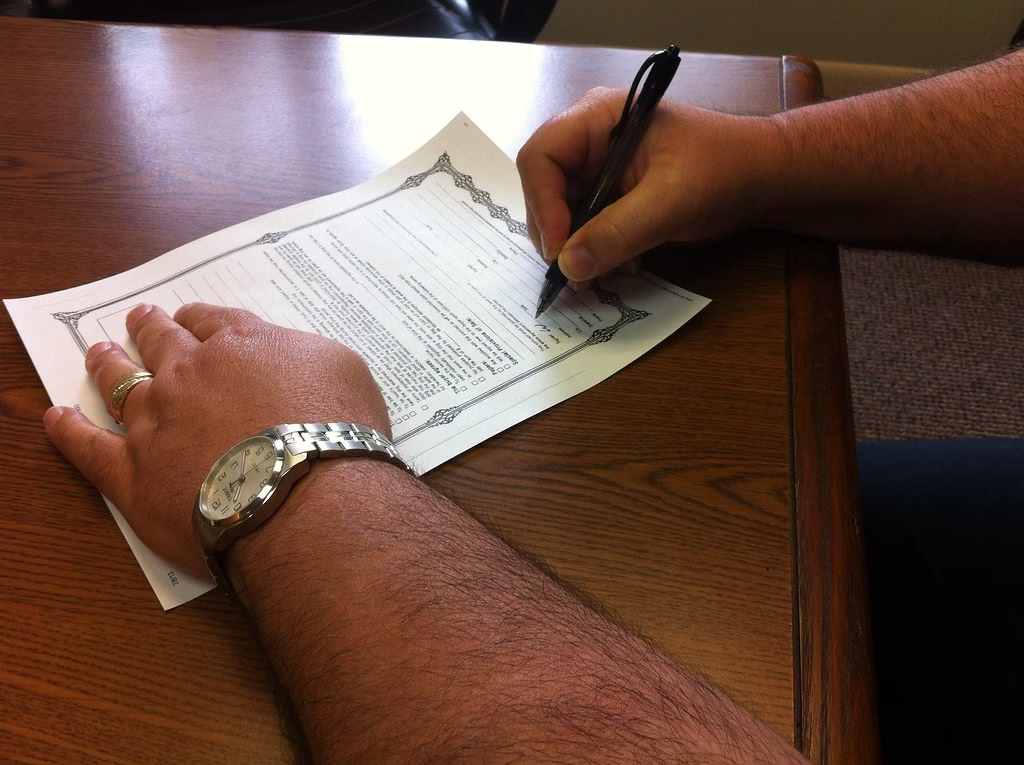
Ask directly, before you sign anything: what happens if I drop the bike? What’s covered, what isn’t, is there an optional damage waiver for an extra fee per day. Get the answer into the contract itself, not just spoken across the counter. Where a damage waiver exists, it usually runs a modest amount per day and caps what you’d owe for a scratch or a drop — optional, not universal, and easy to miss if you don’t ask for it by name.
Bikes That “Go Missing” and Duplicate Keys
This particular trick shows up more in the beach towns — Phuket, Pattaya, Samui — than it does here, and it’s fair to say that plainly rather than pretend Chiang Mai has some epidemic of it. A shop, or someone connected to one, keeps a spare key, waits until your scooter is parked somewhere unattended, then rides off with it. Then comes the bill: a full replacement cost, charged against whatever deposit or card details they’re holding.
Chiang Mai isn’t immune to ordinary opportunistic bike theft though, scam or not. Park at your guesthouse overnight rather than on a random street. A cheap disc lock through the front wheel costs about as much as a couple of beers and makes the whole thing a lot more effort than it’s worth for anyone trying it — shop-connected or just some guy with a screwdriver.
Fake Checkpoints vs. Real Police
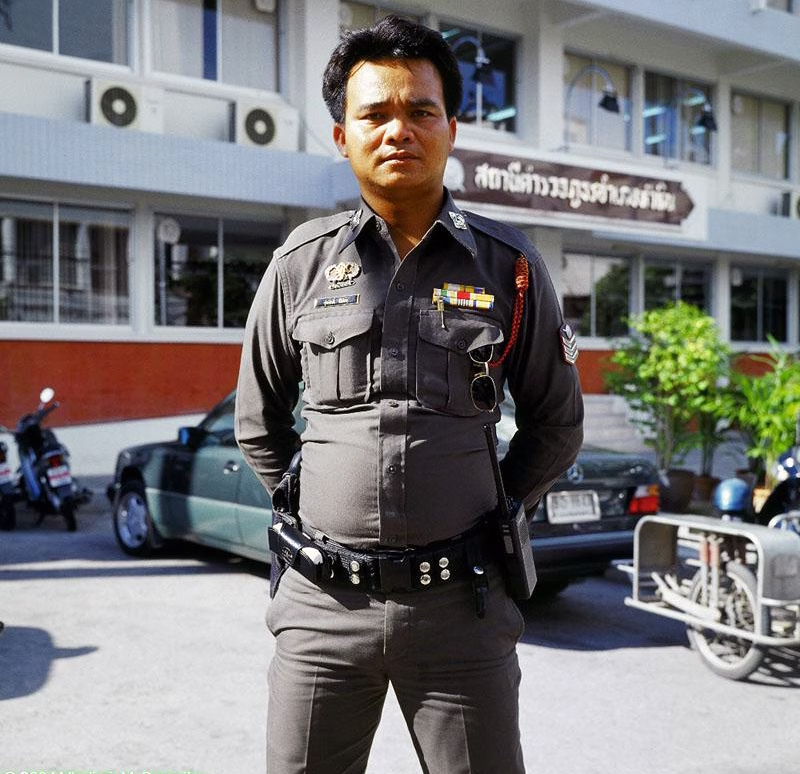
Real traffic checkpoints in Chiang Mai are visible operations. Multiple officers. A marked area, usually with cones or a sign. If you’re stopped and genuinely fined — no helmet, no license, an expired registration sticker — you get a ticket with an amount printed on it, payable at a police station or increasingly online. Not directly into someone’s shirt pocket.
The fake version looks different. One person, sometimes in a half-uniform that doesn’t quite match, waves you down somewhere quiet and asks for cash on the spot for a vague infraction, with no paperwork offered and no interest in giving you any. Real Thai police don’t run routine traffic stops that way.
Genuine fines exist here, and they’re not the end of the world by most travelers’ standards, but they go through a proper channel — a ticket, a receipt, a place to pay it. Cash handed to one person on a quiet road, with nothing written down, isn’t that. If something feels off, ask for a ticket. Ask which station to pay at. A legitimate officer has that answer immediately, because that’s just how the process works. If you’re still unsure, Thailand’s tourist police hotline — 1155 — exists specifically for situations like this, staffed around the clock.
The Simplest Filter: Pick the Shop Carefully
Most of this comes down to who you rent from in the first place. Prices published somewhere you can actually see them before you show up — that’s one sign. So is a shop that doesn’t push for your actual passport when a photocopy would do just fine. And if they hand you a written contract without being asked twice, then stand there while you film the bike before you ride off, that’s someone who isn’t worried about what the video will show later.
Nothing guarantees a perfect experience. But checking those things filters out most of the operators counting on you being too rushed, too jet-lagged, or too polite to push back. Read the reviews before you book, not after something’s gone wrong. It only takes five minutes, and more often than not, those five minutes are the reason one rental goes fine while the next tourist’s turns into a story they’re still telling people back home.
If something does go wrong anyway, ask for the disputed charge in writing before you pay it. An itemized note of what’s being charged and why — not just a number said out loud across the counter. A shop confident it’s in the right won’t hesitate to write that down. Paid your deposit by card instead of cash? An unreasonable charge can usually still be disputed with your bank afterward, which is one more reason cash isn’t always the safer option people assume it is. And if things escalate past an argument over money, the tourist police line — 1155 again — gets involved in disputes like this, not just checkpoint issues.
Honestly, we’d rather lose your business to the shop down the road than have you leave feeling like we played you. Writing this down was just the easiest way to make sure of that.