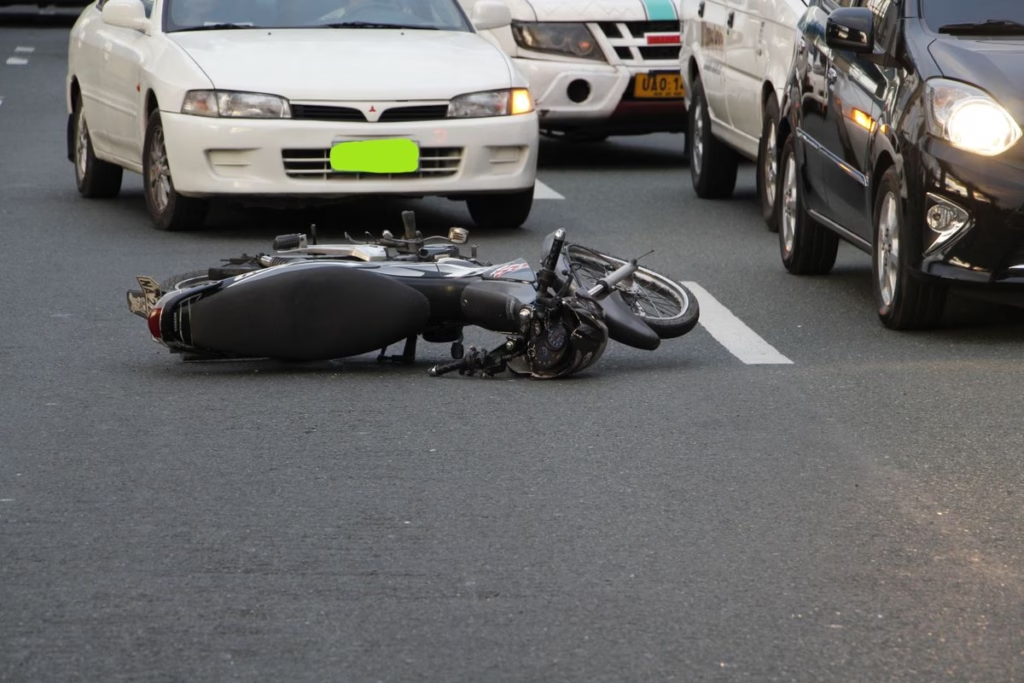
Most riders never think about this until it’s already happening to them — you’re down, or the other bike is down, standing in the middle of a Chiang Mai street trying to work out what happens next. Having rented scooters here for years, I can tell you the crash itself rarely causes the lasting problems. It’s the next ten minutes — when shock and adrenaline make it hard to think straight — that decide who pays, what your rental scooter’s insurance actually covers, and how much hassle you’re in for.
The First Few Minutes Matter Most
Get off the road before you do anything else. Even a minor tip-over on Huay Kaew Road leaves you and the scooter sitting in live traffic, and a second impact is a real risk in the first thirty seconds after a crash. If you or your passenger can move, move to the shoulder. If you can’t — or you’re not sure you should — stay still and get someone nearby to call for help rather than trying to walk it off.
Check for injuries before you check the scooter. Adrenaline hides pain well in the first few minutes, and riders regularly walk away from a crash feeling fine, only to discover a fracture or a concussion an hour later. If anything feels wrong — dizziness, numbness, pain that doesn’t match how the crash looked — treat it seriously.
Save a few numbers in your phone before you ever swing a leg over a rental scooter. 1669 for an ambulance. 191 for general police. 1155 for the Tourist Police — that last one matters specifically for foreigners. Tourist Police officers speak English. They’re used to accident and rental disputes, and they carry actual authority that a rental shop owner doesn’t.
Do You Need to Call the Police?
For anything beyond a solo scrape — any accident involving another vehicle, another person, or an injury — yes, call the police and get a report. A lot of riders skip this because it feels like a hassle, or because the other party pushes to “just settle it here.” That instinct usually costs the foreigner money: without an official report, there’s no neutral record of what happened, and no insurance claim has anything to stand on. It’s also, as the next section covers, what actually decides who pays for the damage.
Ask for a copy of the report, or at minimum the report number, before you leave the scene. Officers in Chiang Mai deal with tourist accidents constantly and most stations can get you a written copy within a day or two. Don’t sign anything written only in Thai that you can’t read yourself — call the Tourist Police line and ask for help translating before you put your name on it. This one habit alone prevents a huge share of the disputes that show up in online forums months later.
One more thing to know going in: don’t over-apologize at the scene, and don’t assume fault out loud even if you think it might be yours. It’s not about dodging responsibility — it’s that an on-the-spot admission, made in a stressful moment with a language barrier in play, can get treated as more definitive than it should be. Let the report and the evidence establish what happened.
Who’s Responsible for the Damage?
This is the part renters usually get wrong, so it’s worth stating plainly. Fault, not who was riding what, decides who pays for vehicle damage in Thailand, and it’s the police, not either driver, who make the final call on who was at fault. If you’re found responsible for the accident, you’re on the hook for repairing both vehicles — the rental scooter you were riding and whatever you hit. If the other party is found responsible, responsibility flips entirely onto them: they, or their insurance if they have any, owe for the damage to both vehicles, including the repair bill on the rental company’s scooter.
That last point catches a lot of renters off guard. A tourist hit through no fault of their own sometimes assumes the rental shop will just absorb the cost of fixing its own scooter — it doesn’t work that way. The bill still belongs to the other driver, not the shop and not you, which is exactly why the police report matters so much: it’s the document that establishes fault.
Where it gets murkier is when responsibility is shared. Police sometimes do find both riders partly at fault, and in those dual-responsibility cases it’s common for each side to simply agree to cover their own vehicle’s damage rather than argue over a split. That outcome, plus genuinely single-vehicle accidents, is where you’re generally looking at your own liability for the rental scooter’s damage — which is where the deposit and any damage waiver come into play, covered below.
What Is พ.ร.บ. (Por Ror Bor), and What Does It Actually Cover?
Fault decides who pays for the vehicles. It has nothing to do with medical costs, which run on a separate system: the compulsory insurance tied to every registered vehicle in Thailand, known as Por Ror Bor. It isn’t optional, and it isn’t something a rental shop adds as a perk — it’s baked into the annual vehicle tax renewal. If a scooter’s tax sticker is current, Por Ror Bor is active on it. If the tax has lapsed, so has the coverage — which is why checking that sticker before you ride off matters as much as checking the tires.
What it actually pays out is narrower than most people assume. It covers people, not property, and it pays regardless of who caused the accident — unlike the vehicle-damage liability above, this part doesn’t wait for fault to be determined. The numbers: 30,000 baht in immediate medical costs per person, released without anyone needing to establish fault first. Death or loss of an organ pays 35,000 baht at that same immediate stage. Once fault has been formally determined, the ceiling rises. Medical costs up to 80,000 baht per person. Death or permanent disability up to 500,000 baht. Loss of an organ somewhere between 200,000 and 500,000 baht, depending on severity.
What it will never pay for: the rental scooter’s repairs, the other vehicle’s repairs, or anything to do with property at all. Riders who hear “the bike is insured” and assume that covers a bent forks or a cracked fairing are working from a false picture. Por Ror Bor is medical-only, for humans, full stop — the vehicle side is entirely the fault-based liability covered in the section above.
What Your Rental Scooter’s Insurance Doesn’t Cover
This is where the gap actually bites. Almost every small scooter available for rent in Chiang Mai carries Por Ror Bor and nothing else. Not because shops are hiding something — voluntary insurance costs real money per bike per year, and at typical rental rates, most operators simply don’t carry it on their fleet. A handful of larger operations offer a paid damage waiver on top, usually with an excess you’re still on the hook for. But the honest baseline, across most budget and mid-range rental shops in this town, is: if you’re found at fault, you’re paying for the repair yourself, out of pocket or out of your deposit.
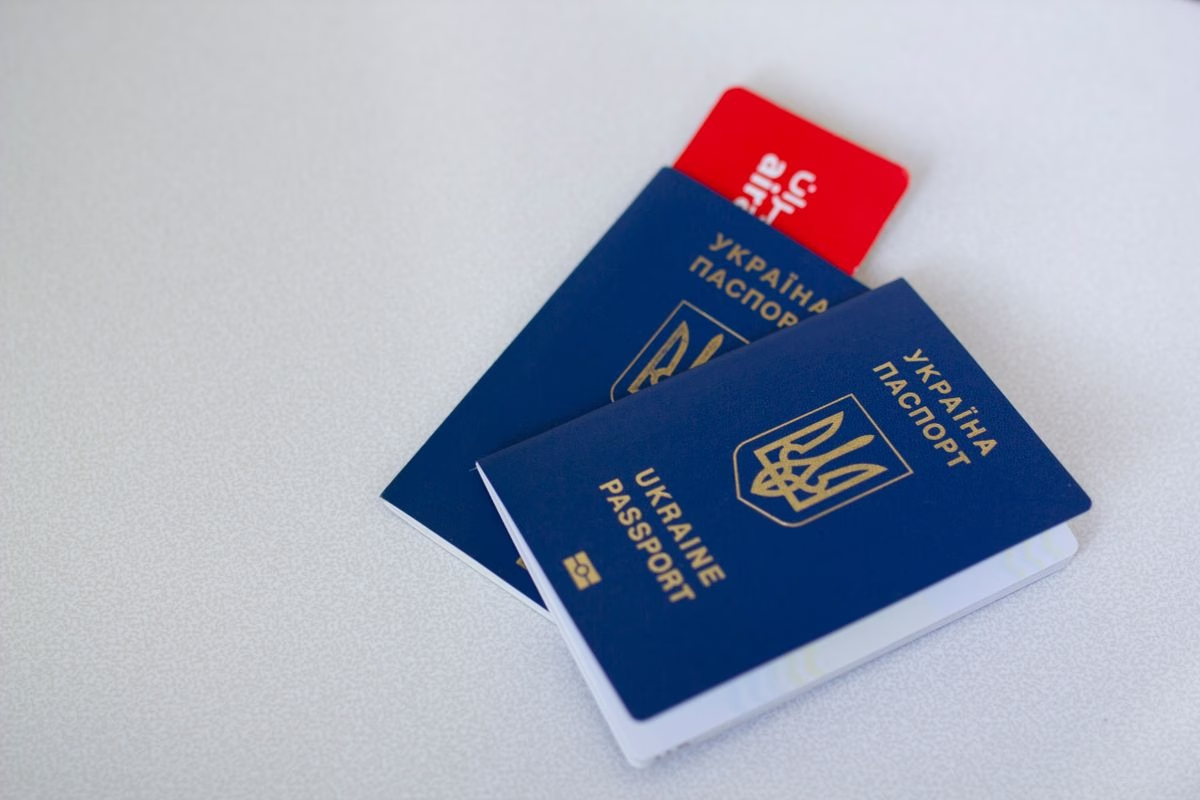
That’s exactly why the deposit exists — it’s the shop’s only real protection against a scooter coming back damaged, through the renter’s own fault, with no way to cover the repair. Before you hand over cash or a passport copy, ask directly what’s included: Por Ror Bor only, or a damage waiver on top, and if so, what excess? A shop that can’t answer clearly is telling you something. Confirm your license situation too — a valid motorcycle license plus an International Driving Permit, which we’ve covered elsewhere on this site, since riding without the right paperwork can void whatever coverage exists on top of the legal risk in a police check.
Film the Scooter Before You Ride Off
This is the single cheapest form of protection available to you, and it costs nothing but two minutes. Before you leave the shop, walk around the rental scooter on video. Keep the staff member in frame if you can. Say the date out loud. Zoom in on every scratch, dent, or scuff already on the bike — the mirrors, the fairings, the seat, the exhaust. Get the odometer reading and the fuel gauge on camera too.
Then actually send it — over WhatsApp or Messenger to the shop, before you ride off, rather than just leaving it sitting in your camera roll. That way there’s a dated copy on their end too, not just something you’re claiming you have if a dispute comes up later. Most disagreements over “you damaged this” come down to one side’s word against the other’s, and a timestamped video both sides can see ends that argument before it starts. Any decent rental operator should welcome this — we certainly do — because it protects the shop from false claims just as much as it protects you from being blamed for damage that was already there before you ever took the scooter out.
If You Think You’re Being Overcharged for the Repair
If the accident was your fault, or shared, expect the rental shop to come back with a repair bill — and expect that bill to sometimes run higher than it should. It’s a common pattern: the shop sends the scooter to a garage they’re affiliated with, and the quote comes back inflated because there’s no independent check on the number. Not every shop does this, but it’s common enough that you should go in expecting to verify the number rather than just paying whatever’s written down.
Ask for an itemized breakdown before you agree to anything — parts, labor, each line separate — rather than a single lump number. A shop unwilling to itemize is usually the shop charging more than the repair costs. The same scratched panel can be quoted very differently depending on where it’s repaired, and an honest independent garage is rarely the expensive option.
Do your own homework before you pay. Take a photo of the damage — or your pre-rental video showing the scooter’s condition beforehand — to a second, unaffiliated mechanic and ask what a fair price actually looks like. A short trip to a garage that has no relationship with the rental shop tells you fast whether the number you’ve been quoted is reasonable. If the shop won’t budge and you genuinely believe you’re being overcharged, call the Tourist Police at 1155 — mentioning that call alone resolves a surprising number of disputes on the spot. Keep your passport out of it where you can; a cash deposit plus a passport photocopy is a fair standard, and a shop demanding your actual passport as collateral is giving itself leverage it shouldn’t have. Get a written receipt for anything you do pay, and don’t sign a damage acknowledgment you can’t read.
Getting Treated and Keeping the Paper Trail
If you’re hurt, get to a hospital before you worry about anything else. Private hospitals here typically want payment upfront, then you claim it back afterward, so keep every receipt, diagnosis note, and discharge summary. These documents are what turns a Por Ror Bor claim, or a travel insurance claim, from a maybe into a paid-out one.
Check your travel policy before you ever need it, not after. A large share of travel insurance excludes motorbike accidents outright, or requires a valid motorcycle license and IDP as a condition of coverage — the same documentation Por Ror Bor and the rental agreement both depend on. One missing piece of paper can knock out coverage across all three at once.
After the Dust Settles
Contact your rental shop as soon as you reasonably can, even if the accident wasn’t your fault, and pass your police report number to your own insurer if you’re claiming separately. Don’t rush into a settlement at the scene — injuries don’t always show up right away, and a number you’ve agreed to is hard to walk back. Most rentals end exactly how they should, with a full tank returned and a deposit handed back. The riders who come out fine on the rare day something goes wrong are the ones who knew, going in, who was responsible for what — and had the video to prove it.