
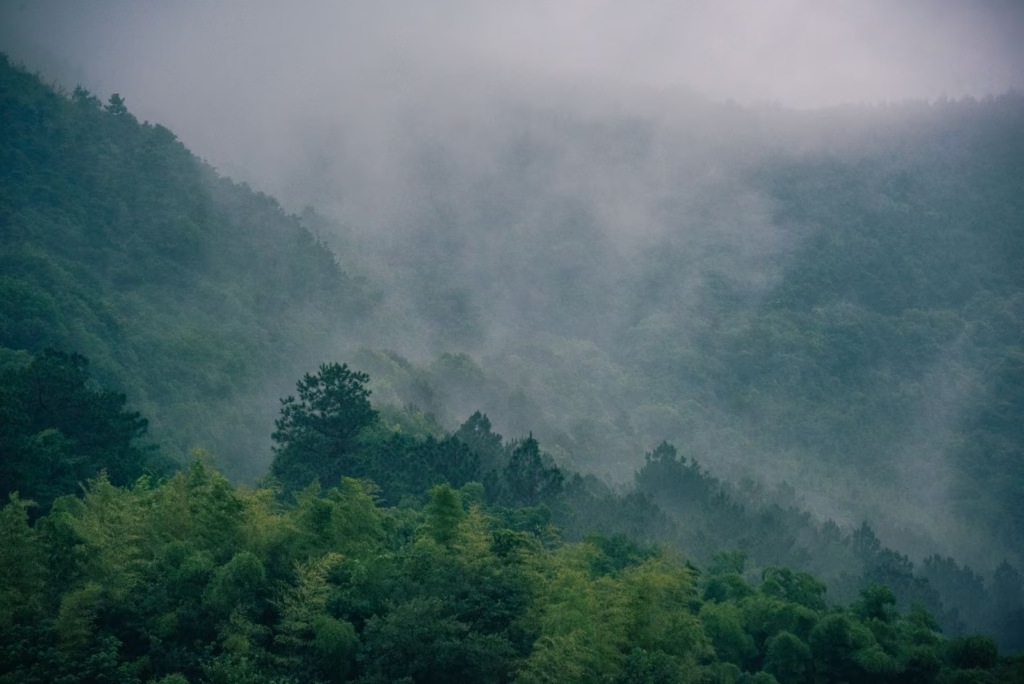
Somewhere past the last of Chiang Mai’s suburban sprawl, the road starts climbing and the air changes. That’s Mae Kampong announcing itself before you’ve even seen it — cooler, damper, smelling faintly of woodsmoke and wet leaves. We get asked about this route more than almost any other day trip, mostly by riders who want mountains and a waterfall without committing to a full loop like Samoeng or Mae Hong Son. Mae Kampong delivers that in a few hours on a scooter, and it’s one of the few rides out of the city that ends at a real, still-lived-in village instead of a paved overlook built for tour buses.
Getting There: The Ride from Chiang Mai
Mae Kampong sits roughly 50 kilometers northeast of the city, tucked into the hills above the San Kamphaeng district. Two routes get you there. The first runs out through San Kamphaeng itself, following the road east until it starts climbing into the hills — straightforward enough that you don’t need much local knowledge to follow it. The second cuts north through Doi Saket, picking up smaller roads that eventually feed into the same mountain approach. Either way, budget close to an hour in the saddle. Traffic in the city adds time on the way out; the mountain roads add time on the way back, once you’re riding slower on purpose.
Small automatic scooters handle this route fine for most of the distance. The last stretch into the village is the part that changes the calculus — narrow, winding, with switchbacks tight enough that riders who’ve never done mountain roads before sometimes find their nerve tested. Go slow through the blind corners. Locals drive this stretch daily and know exactly where the road doubles back on itself; you don’t. If you’ve only ridden flat city streets before, this is a good, forgiving place to get your first taste of real mountain riding — the road itself is paved and well-maintained the whole way, just narrow.
The Climb: What Changes Once You’re Up There
Mae Kampong sits at roughly 1,300 meters above sea level, and you feel the altitude before you see the village — the temperature drops and the air thins out just enough to notice. By the time the road flattens into the village center, you’ve usually gone from sweating in your riding jacket to being glad you brought it. Mist fills the valley most mornings, and that’s a big part of why photographers keep coming back to this particular village. Arrive early, before the day-trip crowd rolls in from the city, and you’ll catch it at its best.
Timing the season matters here more than on a lot of Chiang Mai rides. Cool season — roughly November through February — is when Mae Kampong earns its reputation, with the morning mist thickest and the air cold enough at altitude that a jacket earns its keep. Rainy season turns the switchbacks near the village slick, and that’s exactly the stretch where you don’t want reduced grip, so slow down further than you think you need to if you’re riding through a downpour. Hot season strips away the mist, but the elevation still buys you a few degrees of relief over the city below.
The Village Itself
Mae Kampong is small. Something like 370 people live here, and the place has been settled for roughly a century — the story goes that the original residents came from Doi Saket, drawn uphill by conditions that turned out to be ideal for growing tea. That agricultural history is still the backbone of the local economy. Wooden houses stack up the hillside along a single stream that cuts through the middle of the village, connected by footbridges and narrow concrete paths too tight for a car. You park at the edge and walk in — there’s no driving through the village center itself. The sound of running water follows you almost everywhere inside the village, since the stream and its smaller offshoots run under and alongside most of the walkways rather than being tucked out of sight.
What’s changed more recently is tourism, and the village has leaned into it deliberately without letting it take over. This is a community-based tourism setup — homestays and cafes run by local families rather than outside operators, the kind of setup that keeps the place feeling like a real village instead of a theme-park version of one, even on a busy Saturday.
Mae Kampong Waterfall
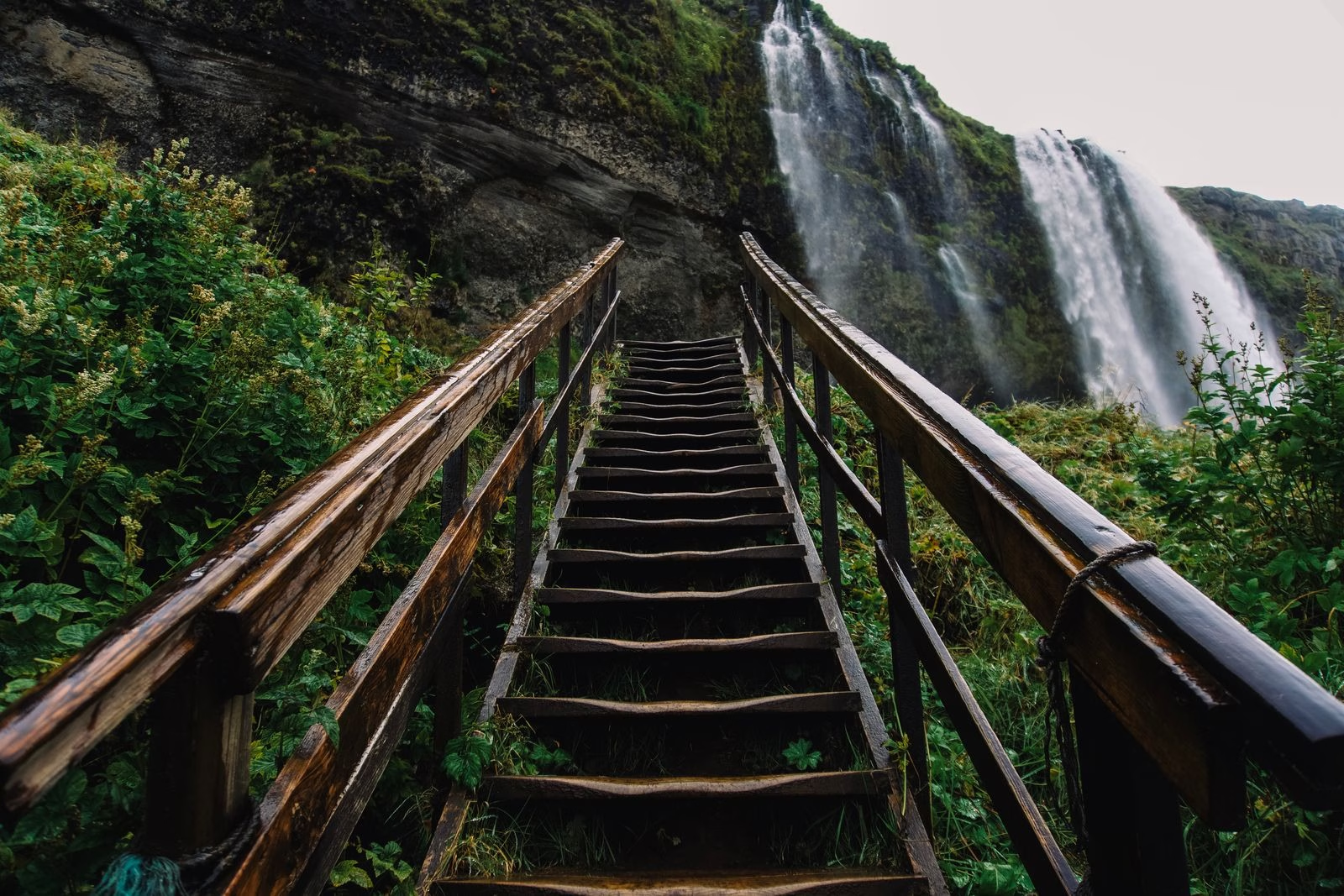
The waterfall is the main reason most day-trippers show up, and it’s an easy add-on to the ride, no detour required. It’s a short walk from the village center — maybe ten or fifteen minutes on foot. Multiple tiers. Wooden stairs run alongside the falls, letting you climb from pool to pool instead of just viewing it from the bottom. Getting to the top tier takes real effort — figure something like half an hour of climbing, more if you stop to swim along the way. There’s a pool at the base big enough to get in, and on a hot ride day that’s exactly what most people do. No entrance fee for the waterfall itself, which is one less thing to plan around.
Coffee, Tea, and the Village’s Cafes
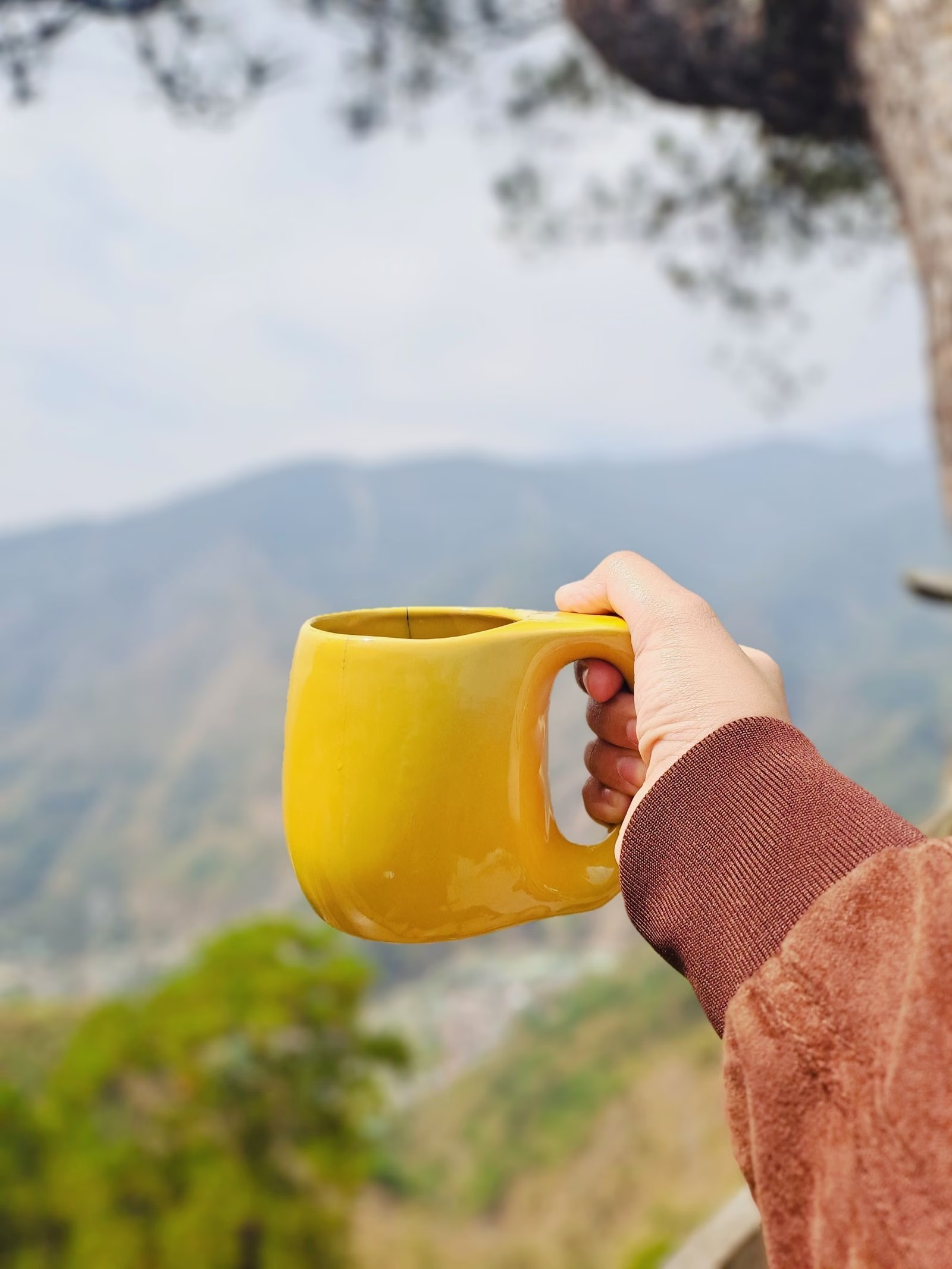
Coffee is the other reason Mae Kampong shows up on so many Chiang Mai itineraries, and it’s not just a marketing angle — this is a working coffee and tea-growing area, and what gets grown here mostly stays here instead of getting shipped out. Nearly every café in the village serves something brewed from beans grown on the hillside around it. A cup typically runs somewhere in the 40-60 baht range, cheap by any standard, let alone what you’d pay for a specialty coffee back in the city.
The café that gets singled out most often is Teddu Coffee, mostly because of what’s attached to it — a swinging suspension bridge that crosses the river with the waterfall as a backdrop, doubling as the path back out to the main road. It’s become one of the more photographed spots in the village for exactly that reason. Beyond Teddu, several hillside cafes offer views back down over the rooftops and the valley. Wander on foot to find one instead of picking in advance — half the appeal is stumbling onto a good view from a plastic chair with a coffee in hand.
Wat Khantha Phueksa: The Village Temple
Mae Kampong has exactly one temple, Wat Khantha Phueksa, and it earns the short detour even if temples aren’t usually your thing on a ride. It’s built from golden teak, carved in detail rather than left plain, and it started life as a hermitage before being moved to its current spot in the village center back in the 1920s. One detail that stands out: its ordination hall sits surrounded by water, a design shared by only one other temple in the country. You don’t need long here, but it’s a different kind of stop from the waterfall-and-coffee circuit most riders stick to.
Food and Staying Overnight
If you’re only doing the day trip, you’ll still eat well. Northern Thai staples show up on most menus, including naem mok, a fermented pork sausage wrapped in banana leaf that’s distinctive enough to the region to order on name alone. Sai ua, the more widely known northern sausage packed with herbs and red curry paste, is easy to find too.
Mae Kampong also works as an overnight stop if you want to turn this into something more than a day ride. A lot of visitors do exactly that, staying in one of the village’s homestays rather than riding back down the mountain in the dark. These are family-run rather than hotel-style, usually booked directly through the family’s Facebook page rather than through the apps you’d normally use. A stay typically runs somewhere between 500 and 1,200 baht a night, breakfast included, with a traditional Lanna dinner available if you ask. It’s a slower, quieter version of Mae Kampong than the day trip gives you — mistier in the morning, and worth building into your schedule if you can.
Parking, Timing, and a Few Practical Notes
Parking in the village center gets tight, especially on weekends and especially by midday. There’s a lot near the temple with room for around twenty vehicles, and a smaller one at the waterfall with space for about seven cars. If both look full when you arrive, park on the outskirts and walk the rest of the way in rather than circling looking for a spot — it’s a small village, and nothing is far. Bring cash. Most of the cafes and food stalls here don’t take cards, and there’s limited ATM access once you’re up the mountain, so sort that out before you leave the city.
Weekdays are quieter across the board — parking, café crowds, the waterfall itself. If you can ride out on a weekday morning, do it. You’ll get the misty version of the village that shows up in every photo of the place, not the one crowded with the weekend day-trip rush from Chiang Mai.
Is Mae Kampong Worth the Ride?
For a half-day or full-day trip out of Chiang Mai, yes — easily. It’s close enough that you’re not committing a whole day just to driving, the road itself is a legitimate, satisfying ride rather than a means to an end, and the destination has enough going on — waterfall, coffee, a temple, real village life — that you won’t be standing around wondering what to do next. Rent something you’re comfortable taking uphill on a narrow road, leave early, bring cash, and you’ve got one of the better short rides out of the city.