
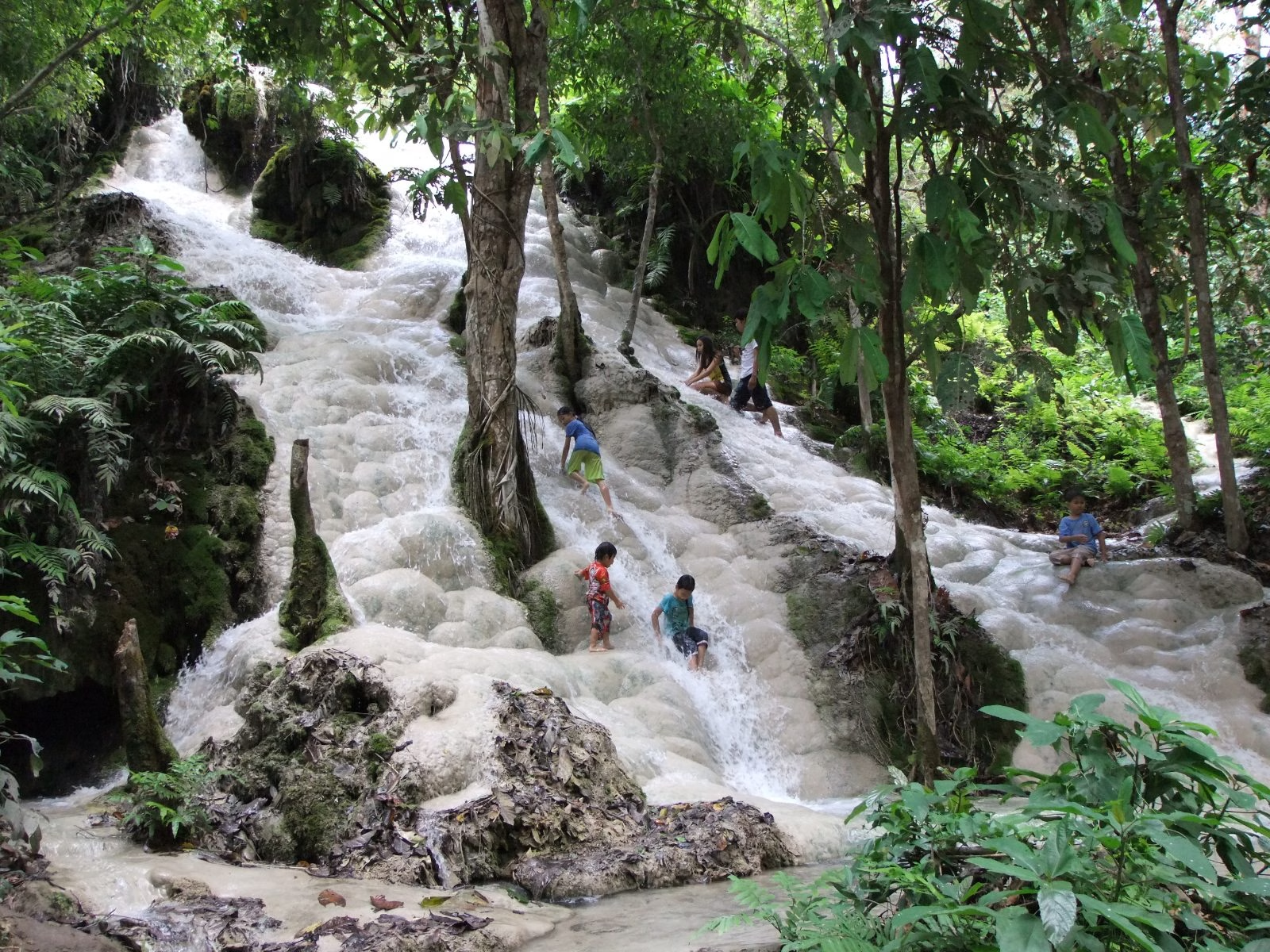
Sticky Waterfall (Bua Tong) by Scooter from Chiang Mai: Route, Times and Tips
Bua Tong, better known as the Sticky Waterfall, is about 60 km north of Chiang Mai, and the easiest way to get there on your own is by scooter: roughly an hour and a half each way along Route 1001, the Chiang Mai–Phrao road. Entry is free, it’s open 8am to 5pm every day, and you can walk straight up the falls because the rock under the water is rough mineral, not slippery stone. Plan on half a day, or most of a day if you stop for lunch on the way back.
We rent scooters in Chiang Mai, and this guide covers the route, how long it takes, which scooter to take and what to bring.
Where is the Sticky Waterfall?
The Sticky Waterfall is in Mae Ho Phra sub-district, Mae Taeng district, in the Bua Tong–Nam Phu Chet Si forest park north-east of Chiang Mai city. The Thai name is Nam Tok Bua Tong (น้ำตกบัวตอง). The park also holds Nam Phu Chet Si, the “Seven-Colour Spring” that feeds the falls.
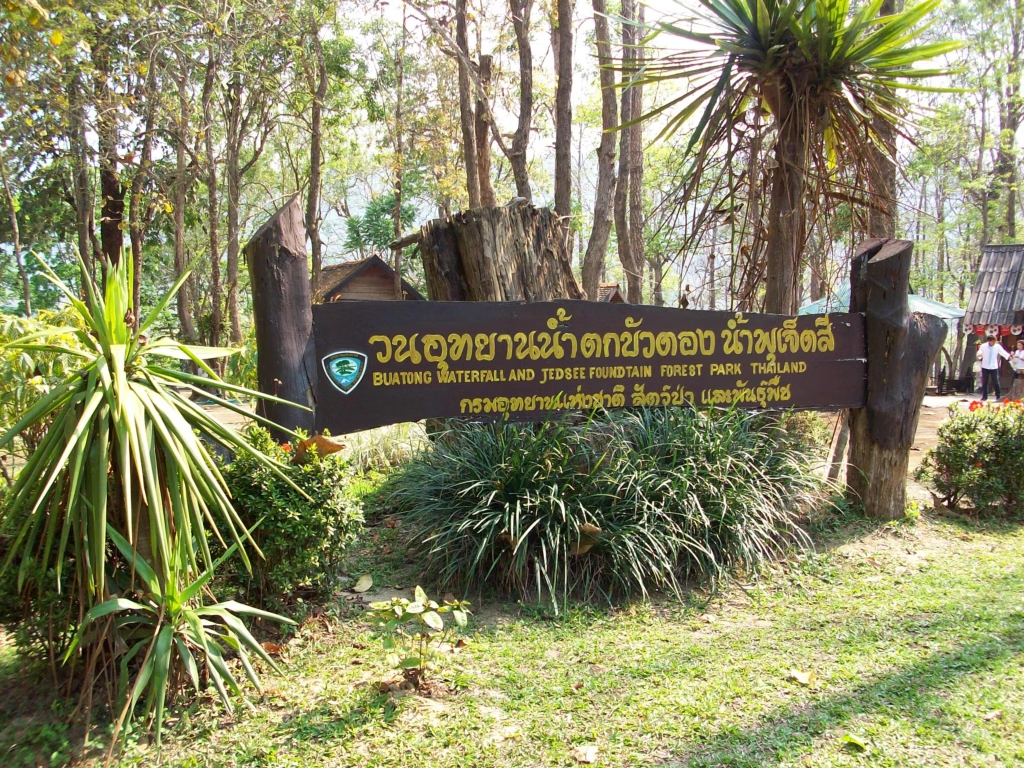
The turn-off is on the right-hand side of Route 1001 at about the 48–49 km marker, then it’s around 3 km up a side road to the car park (TrueID Travel). Look for the brown signs for น้ำตกบัวตอง or “Bua Tong Waterfall”.
How do you get to the Sticky Waterfall by scooter?
From Chiang Mai, head north-east to San Sai and pick up Route 1001, the main road to Phrao, then stay on it until the waterfall turn-off. Route 1001 is a wide, mostly straight highway for the first stretch and gets quieter and greener after the San Sai area. There are no buses or public transport to the falls, so the choices are a scooter, a hired car or a taxi.
From our shop on the Suthep side of the city, cross town to the north-east and join Route 1001 there. Put “Bua Tong Waterfall” into Google Maps before you leave and it will take you onto the same road. Download the map for offline use too, in case the signal drops near the falls.
Fill up before you leave the city or in San Sai. A 125cc scooter will do the round trip of about 120–130 km on one tank, but there’s no reason to cut it close.
How long does the ride take?
Expect about 1 hour 30 minutes each way from the old city, a little more from the Suthep side. Most guides give the distance as about 60 km and the drive as about an hour and a half (Atlas Obscura, The Backpacking Family). Traffic out of the city is heaviest around 8–9am and 5pm on weekdays.
| The trip in numbers | |
|---|---|
| Distance from Chiang Mai | about 60 km each way |
| Ride time | about 1 hr 30 min each way |
| Road | Route 1001 (Chiang Mai–Phrao road), turn-off at about km 48–49 |
| Opening hours | 8am–5pm, every day |
| Entry fee | free |
| Time at the falls | 1.5–3 hours |
| Whole trip | 5–6 hours |
Opening hours and the free entry come from several current guides (Atlas Obscura, The Backpacking Family, updated December 2025). The park can change these, so check the park’s Facebook page or call 093 139 3556 if you’re going on a public holiday.
Which scooter should you rent for the Sticky Waterfall?
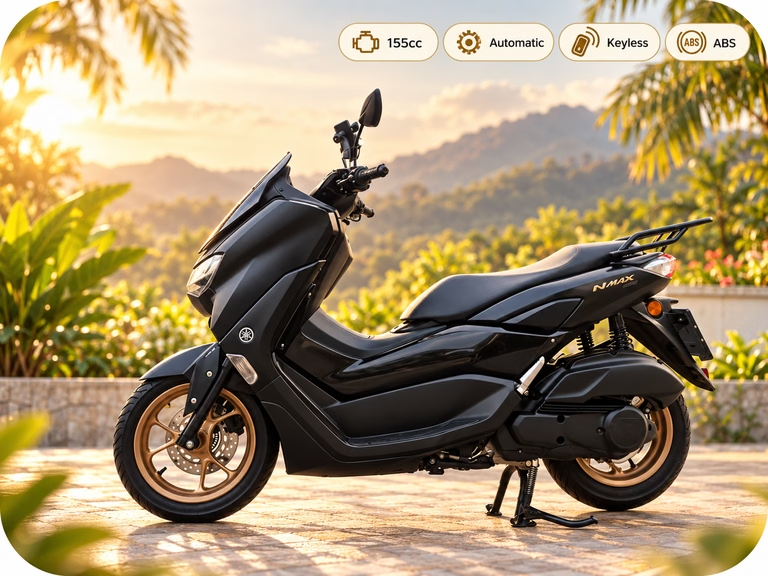
A 125cc automatic is enough for one person: Route 1001 has no big climbs, and the side road to the car park is short. With two people, or if you want to cruise at highway speed without the engine working hard, a 155cc like the Yamaha NMAX or Aerox is more comfortable. For two adults on a long day, our 300cc scooters (Yamaha XMAX and Honda Forza) are the easy option. Prices for every bike are on our Scooters & Rates page.
Not sure? Our guide on which scooter to rent in Chiang Mai explains the differences.
Is the Sticky Waterfall really sticky?
Yes, mostly. The water at Bua Tong comes from a spring rich in calcium carbonate, and over time the minerals have built up into a rough, porous crust (tufa) on the rocks (Atlas Obscura). It feels like coarse sandpaper under your feet, so you can walk up through the running water without sliding.
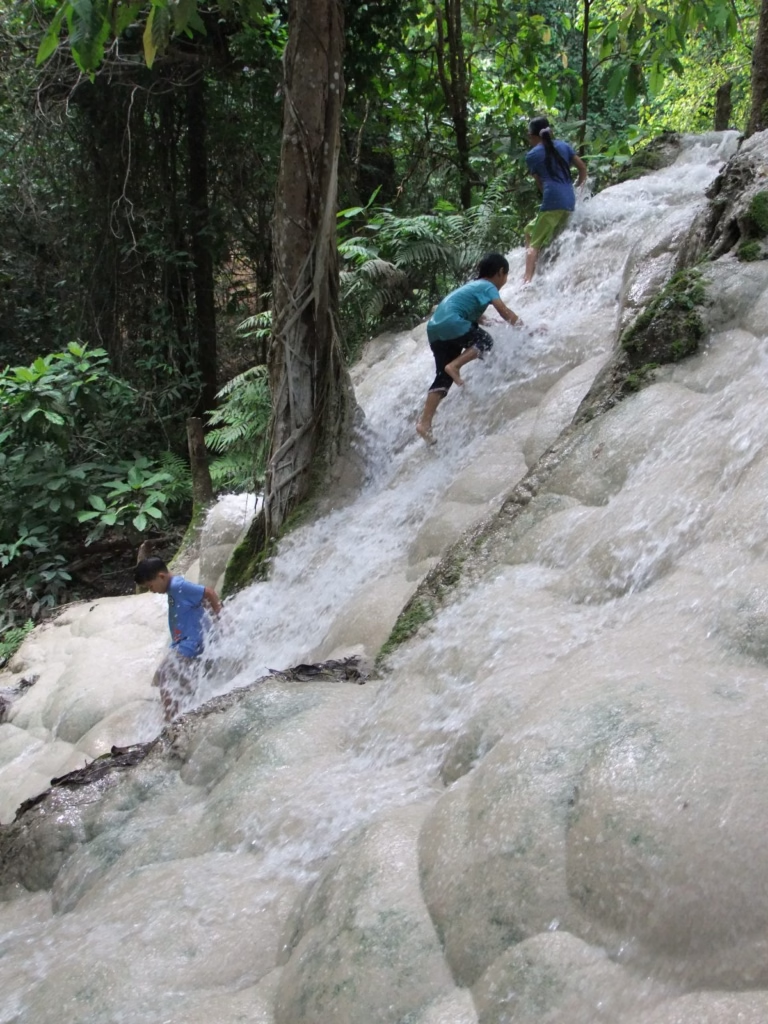
“Mostly” matters. Grey, dark or mossy patches are slippery, and people do fall. Stick to the light, cream-coloured rock, use the ropes where they’re fixed on the steeper sections, and come down the same way you went up. Bare feet grip best for most people; water shoes are fine too.
The falls are in three to four tiers, about 250 m from bottom to top (TrueID Travel). Most visitors climb the lower three tiers and walk back down the steps beside them. The top tier is steeper and the path runs out there, so it’s not worth the risk.
What is the Seven-Colour Spring (Nam Phu Chet Si)?
Nam Phu Chet Si is the spring that feeds the Sticky Waterfall, about a 5-minute walk from the top of the falls (The Backpacking Family). It’s a clear pool where the mineral water comes up through the ground; the name means “seven-colour spring”. It’s also treated as a sacred spring with a small shrine (Atlas Obscura), so look, but don’t swim or climb in it.
It’s worth the short walk: the path is flat and shaded, and it explains where all that grippy rock comes from.
When is the best time to visit the Sticky Waterfall?
Go on a weekday morning. The falls are busiest on weekends and Thai public holidays, when local families come up from the city; on a weekday before about 10am you may have tiers to yourself. The spring keeps the water flowing all year (Tieland to Thailand), so there’s no dry-season risk of an empty waterfall.
For the ride itself, November to January is the most pleasant: dry roads and cool mornings, though it can be properly cold on a scooter at 8am, so bring a jacket. February to April is burning season, when smoke haze can make a 3-hour round trip unpleasant; check the air quality on air4thai before you go. June to October brings afternoon rain, so leave early and aim to be heading home by 2pm. Our best time to ride a scooter in Chiang Mai guide goes month by month.
What should you bring to the Sticky Waterfall?
You’ll get wet, so pack as if you’re going swimming:
- Swimwear or clothes you don’t mind soaking, plus a change for the ride home.
- A small towel and a dry bag for your phone and wallet. There are lockers, toilets and a shower room at the car park (The Backpacking Family).
- Water and snacks. Don’t count on buying a meal at the falls, and food isn’t allowed in the waterfall area itself (Tieland to Thailand), so eat on the way or bring something for the picnic tables near the entrance.
- Cash for drinks and fuel.
- Sun cream and a hat for the ride.
- A jacket for the cool-season mornings, and a rain poncho from June to October.
Leave your helmet in the scooter’s under-seat storage while you climb, and keep the key in a zipped pocket or the locker.
Is it better to go by scooter or take a tour?
If you’re comfortable riding outside the city, the scooter is the better way to do it. You choose your start time, which makes the biggest difference at Bua Tong, and you can stop wherever you like on the way back. A return taxi costs about 800–1,000 baht and needs booking a day ahead (The Backpacking Family).
A tour or taxi makes more sense if you’ve never ridden on a highway before. Route 1001 is a busy highway out of the city, with trucks and fast traffic, and a 3-hour round trip is a long first ride. If that’s you, do a shorter ride first, like Doi Suthep, and save the Sticky Waterfall for later in your trip. Our motorcycle safety guide covers the rules of the road.
Other day trips by scooter from Chiang Mai
If you liked this ride, these are the next ones to try:
- Mae Kampong, a hill village with coffee and a waterfall, about an hour east.
- The Samoeng Loop, a 100 km mountain loop with route maps and Google Maps directions.
- Doi Inthanon, Thailand’s highest mountain, a full day out.
- Our Chiang Mai city guide, with a map of 52 places closer to town.
Ready to ride? See every scooter and price on our Scooters & Rates page, or message us on WhatsApp. We deliver free anywhere in central Chiang Mai.
Top photo: climbing Bua Tong Sticky Waterfall. Photo: chootrong, Wikimedia Commons, CC BY 3.0
Written by Anton from AA Scooter Rentals; drafted with AI help and fact-checked against current sources.





.jpg)
.jpg)